Developing Kingdom Leaders – Tom Yeakley

Taking the Mystery out of Leadership

Golden Apples

Hippomenes was a mythical, Greek young man who was in love with the beautiful Atalanta.  Atalanta, in addition to her striking beauty, was also a gifted runner, but she had a cruel, sadistic character.  Many young men became infatuated with her beauty and desired to marry her.  These men were challenged to a foot race with two conditions.  If the man won the race, he could marry Atalanta.  But if he lost, he would pay with his life.  Many a man tried and paid the ultimate price for his second place finish.

Hippomenes also became mesmerized by Atalanta’s beauty and challenged her to a race.  Shortly after the race began he lagging behind.  Reaching into his tunic, he withdrew a golden apple and threw it in front of the streaking Atalanta.  The flash of gold caught her eye and she stopped to pick up the golden fruit as Hippomenes raced by.  She soon recovered and again moved ahead of him.  Hippomenes pulled a second golden apple from his tunic and threw it in front of Atalanta who once again stopped to pick it up.  As Hippomenes passed the crouching Atalanta, she realized that the race was nearing the finish and she recovered soon enough to regain a comfortable lead with a short distance to go.

Hippomenes retrieved the last of his golden apples from his tunic and rolled it ahead of Atalanta as she approached the finish.  Atalanta was in a quandary; should she stop and pick up the apple or press for the finish line?  She reasoned that she certainly could do both, so she stopped to placed the golden fruit in her robe just a Hippomenes passed her and raced towards the finish.  She recovered, but now with such a short distance, she was not able to beat him.  Hippomenes had won!

This is not an illustration on how to find a life partner!  Rather, as you race through life, you will find the enemy of your soul rolling “golden apples” of opportunity, compromise and temptation in your path.  Are you stopping to admire these golden globes?  Have you picked them up and made them your own?
Jesus’ Way of Developing Leaders

I’ve always loved the Gospel of Mark because of the action oriented narrative.   You’ll remember that Mark’s gospel begins with a one-year gap (Mark 1:13-14) between His baptism and the 18-month ministry in Galilee.  This first year of Jesus’ public ministry is only recorded in John 1-4.

Below is a short outline of some key leader development passages as found in Mark.  While this is not an exhaustive list, it does serve as a reminder of how to be more intentional about developing those leaders we have influence with.

Mark 1:14-18 –  Jesus was on the move and He recruited others to join Him in the movement; note that He recruited busy, industrious people

Mark 1:35 –  Jesus was a pacesetter/model, especially in spending time with His Father

Mark 1:36-39 –  Jesus had a plan for His ministry; He took the risk of disappointing those He was leading by saying ‘no’ to their desires for Him

Mark 3:14 –  the emerging leaders were “with Him” first and then sent out

Mark 3:16-17 –  having nicknames indicates He knew His disciples well; there was a deep, personal relationship with Him

Mark 4:10,34 –  He gave special training and development to a few; He told them “why and what”

Mark 4:35 –  Jesus took the initiative and led out by example

Mark 6:6-9 –  Jesus modeled faith and expected it of His disciples; living by faith was to be a lifestyle

Mark 6:30-31 –  He modeled for them the importance of taking time for reflective evaluation and relaxation

Mark 8:31 –  He sought to keep His disciples informed about upcoming events

Mark 9:14-16 –  Jesus protected His disciples from threats; note how He takes the argument with the teachers of the law onto Himself

Mark 10:28-31 –  Jesus was an encourager; He affirmed good behavior

Mark 11:1-3 –  He emphasized forethought, scenario planning, and training before sending them out on assignments

Mark 14:10 –  Jesus too had one of His leaders who did not do well; not all failures are reflections on the leader and their ability to train others

Reflect on these passages.  Open the bible with those you are developing.  Look carefully at the model of Jesus and how He developed leaders.  Remember to, “Lead from the Scriptures and into the Scriptures!”

Developing a Leader’s Faith

DAVID – DEVELOPING AND EXERCISING FAITH
1 Samuel 17:1-50

Faith:  acting in accordance with what God has promised to do or in accordance with His character

Development of Faith

1 Samuel 17:36-37
Your servant has killed both the lion and the bear; this uncircumcised Philistine will be like one of them, because he has defied the armies of the living God. 37The LORD who delivered me from the paw of the lion and the paw of the bear will deliver me from the hand of this Philistine.”
Saul said to David, “Go, and the LORD be with you.”

Lesson:  Yesterday’s tests prepare us for today’s trials (cf. Jeremiah 12:5)

Exercising Faith

1 Samuel 17:38-40
Then Saul dressed David in his own tunic. He put a coat of armor on him and a bronze helmet on his head. 39 David fastened on his sword over the tunic and tried walking around, because he was not used to them.  “I cannot go in these,” he said to Saul, “because I am not used to them.” So he took them off. 40 Then he took his staff in his hand, chose five smooth stones from the stream, put them in the pouch of his shepherd’s bag and, with his sling in his hand, approached the Philistine.

Lesson:  God has provided all we need to accomplish His work through us (cf. Zechariah 4:6)

1 Samuel 17:45-47
David said to the Philistine, “You come against me with sword and spear and javelin, but I come against you in the name of the LORD Almighty, the God of the armies of Israel, whom you have defied….47 All those gathered here will know that it is not by sword or spear that the LORD saves; for the battle is the LORD’S, and he will give all of you into our hands.”

Lesson:  It is God, not our faith, resources, or abilities, who brings success to our efforts  (cf. Luke 17:5-6; 2 Corinthians 1:8-9)

As Kingdom leaders we are reliant upon unseen resources that we tap into by faith.  This is a learned habit developed over a lifetime.  Where’s your confidence resting?  Is it in what is seen and known or are you trusting the unseen Lord to lead, guide, and resource you?

Leading from a Focused Life

Dr. RJ (Bobby) Clinton in his masterful work titled, “Strategic Concepts that Clarify a Focused Life,” states the following principles that have proven to be a guiding light for me over the years.

For Ezra had prepared his heart to seek the law of the Lord, and to
do it, and to teach in Israel statues and judgments.       Ezra 7:10

“Clearly some Bible characters led focused lives.  There was purpose in what they did. Disciplined minds followed through on decisions that continually led to that purpose.  What can we learn about lives that are extremely focused?  Do they just happen?

“Leaders, must make decisions about life and ministry which flow from their understanding of who God has made them to be and for what God is shaping them.  These decisions will lead them to effective purposeful lives, which in retrospect will be seen to have been focused lives.  But it is not a self-seeking individualistic choice of life, but a seeking of what a SOVEREIGN GOD is doing—His purposes.  All of the focused life thinking must be done in light of a strong understanding of the Sovereignty of God.

“What is a focused life?  A focused life is:

• a life dedicated to exclusively carrying out God’s effective purposes through it,
• by identifying the focal issues, that is, the life purpose, effective methodology, major role, or ultimate contribution which allows
• an increasing prioritization of life’s activities around the focal issues, and
• results in a satisfying life of being and doing.

Dedicated usually indicates that there was some sort of second decision beyond just being a Christian.  That decision places all that the leader is or has at God’s disposal to be used by and for God.  From that moment on, the leader is on a pilgrimage to discover God’s special purposes, that is, a personal destiny with God.

Life purpose, effective methodology, major role, or ultimate contribution are called the focal issues.  That is, they are the major ways that God will reveal that for which we are designed.  In a nutshell, life purpose is the driving force behind what we do.  Major role is the occupational position from which we accomplish that life purpose.  Effective methodologies are means that are effective for us to deliver our ministry that flows from that life purpose.  And ultimate contributions are the lasting results of that ministry

“It is the discovery of these focal issues, that is, their movement from implicit to explicit, which provides the possibility of prioritization or in other words, proactive decision-making. The earlier we can discover these issues, the earlier we can proactively act upon them. The leader then makes strategic decisions, which take into account the discoveries. In short, they manifest aspects of a focused life.

“Note the final bold-faced words in the focused life definition, a satisfying life of being and doing.  Leaders who discover life purpose and any other focal issue, which synergizes with it, will see things happen in their lives.  They will become people of character.  They will accomplish.  When all is said and done and life is drawing to a close, they can look back and say, “Folks, you are looking at a fulfilled person.  I am happy with the end product of God’s shaping—who I am, what I have become.  I am happy at what God has done through me—what I have done.  Life was worth living.  It has been a fulfilling pilgrimage.  Praise God!” “

How’s your focus?

What’s So Bad About Hierarchy?

Much of the ‘prevailing wind’ today in organizational leadership is blowing towards the ‘flat organization’ – that is, the fewer the leadership levels we have in an organizational structure, the better that organization will be able to accomplish the mission or task.  ‘Bureaucracy’ is a bad word which implies sluggishness, bloated and wasteful budgets, unmotivated people, and a lack of creativity or willingness to adapt and change.

While the above characteristics of hierarchy, as presently practiced, are true in many organizations, it does not have to be so.  Hierarchy in and of itself is morally neutral – it’s not good, bad, or purple.  A hierarchical structure is no better or worse than a flat organizational structure that has fewer levels of leadership.  Good leaders within a hierarchical structure can unleash creativity, innovation, spawn organic movement, empower entrepreneurs, and stimulate growth.  The structure is not the issue, but rather those within the structure who are setting direction and making decisions that make it good or bad.

There are two important reasons for hierarchy:  health and complexity.  By ‘health’ we mean the health of the individuals within the organization.  We want those we are leading to thrive under our leadership, not just survive.  Leadership is not just about accomplishing mission together, it is also about caring well for those we lead.  Having a large span of leadership with too many direct reports will not allow us the capacity to truly ‘know well the condition of our flocks’ (see Proverbs 27:23).

With increasing complexity of mission comes the need for more leadership capacity.  A large task, with multiple facets, demands the contribution of many people.  These people need a common purpose, clear vision, doable jobs, and accountability for their contributions.  This oversight is good stewardship and need not be restrictive.  It’s how this leadership is done that is key!

We have an example from King David in 1 Chronicles 27 as we see how he organized his kingdom.  40+ leaders are mentioned with their respective responsibilities – army commanders, family heads, property managers, an executive team, and spiritual advisers all contributed to David’s leadership capacity.   The size and complexity of the kingdom required good leaders with many varied, intersecting responsibilities.

So, the next time we are tempted to criticize hierarchy, let’s pause a moment and think.  Is it the structure or is it the leaders within that structure that makes it a challenge?  Mankind keeps looking for better structures, but God keeps looking for better leaders!  May it begin with us!

Help! I’m Doing Too Much!

Busyness, fast pace, urgency, and crowded schedules are the hallmarks of the life of a leader.  If you don’t want to be busy, then don’t attempt to lead!  But, there is no glory in flaming out young because of foolishness and unwise choices about lifestyle and priorities.  Decades of contribution lost because of our bad choices do not honor God.

As a young missionary in Indonesia I had the great privilege of escorting the missionary statesman, J.O. Sanders from one end of Java to the other.  That day together talking together marked me for life.  After listening to me for some time share my hopes, dreams, aspirations, and those things that I was not yet doing or desired to do he stopped me.  “Tom,” he said, “I’d like to say something to you.”  Now this was J.O. Sanders!  And he had something he wanted to say to me!  I was all ears.

“Tom, you need to come to grips with the possible!”

Some years later I was beginning a different leadership role back in the U.S.  I asked one of our leaders if he had any advice for me as I launched into this new responsibility.  Immediately he said this, “Tom, a mark of maturity is being able to live with unfinished tasks.”

While both leaders used different words, their message to me was the same.  There will always be more things to do than we have time or energy to do them.  The ‘to-do list’ only grows longer for a leader, seemingly never shorter!  The urgent demands for our attention scream for us to stop immediately and address them, only to be followed by more demands.  What to do?

“Come to grips with the possible!”  Put in a good days work, then lay your head down on the pillow and go to sleep.  Let God be God for you and your responsibilities while you rest.  Those demands (and more) will be waiting for you tomorrow.  Work hard and then lay it down!  Taking your cares to bed at night makes for very fitful and unrefreshing sleep!

The words of Jesus are such a penetrating reminder to all of us who are doing too much:

Who of you by worrying can add a single hour to his life?          Matthew 6:27

Therefore do not worry about tomorrow, for tomorrow will worry about itself. Each day has enough trouble of its own.          Matthew 6:34

In vain you rise early
and stay up late,
toiling for food to eat—
for he grants sleep to those he loves.          Psalm 127:2

How’s your sleep patterns?  Are you awakening each morning rested or weary from a night of  tossing and turning? Are you able to turn off your mind as it runs to your pressing, urgent issues of life and leadership?  Lay them down at His feet…He is willing and more than able to deal with them, while you get some much-needed rest!


Success – A Leader’s Greatest Challenge

In 2 Samuel 8 we read about David and how he handled his success as a leader.  The following are several observations and principles that we can take away and apply to our own leadership should we experience success.

In vs 1-5 we see the listing of David’s initiatives against the Philistines, Moabites, and Arameans.  The results are summarized in verse 6 – The Lord gave David victory wherever he went.  David experienced great success in his military campaigns against the surrounding enemies of Israel.  In fact, he had success in everything that he attempted.

The resulting success of his campaigns led to David becoming wealthy.  Remember that this son of Jesse came from a family that raised sheep for a living.  This new-found wealth came quickly and could have turned the heart of a lesser man.  But we see David’s response in vs 11 – King David dedicated these articles to the Lord, as he had done with the silver and gold from all the nations he had subdued… 

His successful military campaigns and growing wealth led to the seemingly inevitable conclusion as to how he was viewed by others.  In vs 13 we read – And David became famous…  Personal fame for the successful leader is a challenge that many leaders face, just as David had to deal with.

In vs 15 we see how David led after experiencing successful leadership efforts, growing personal wealth, and increased personal fame – David reigned over all Israel, doing what was just and right for all his people.  This is one of the reasons why David is a hero of mine.  He seemed to be able to handle success well.

Now immediately we are thinking of his low points in his adultery with Bathsheba or his counting of the army – yes, those were huge mistakes with huge consequences for his life and leadership.  And yet, through it all, he recovered and did not let those personal failings derail him.  He confessed his sin, humbled himself before God and men, and continued to lead.  All failures need not be fatal!

David was real – he had great strengths, also some glaring weaknesses.  Yet through it all he “did what was just and right for all his people.”  How are you handling your success?  Are you stewarding well God’s resources that have come your way due to this success?  What goes on in your heart when people point out your successes or publicly praise you?

Leading a Change Process

No leader is satisfied with the status quo. All leaders want to bring change. John Kotter in his modern classic, Leading Change (p 21) urges 8 Steps in the Process of Leading Change.

1. Establish a sense of urgency
• Examine performance against goals
• Identify and discuss crises, potential crises, or major opportunities

2. Create a guiding coalition
• Form a group with enough power to lead the change
• Form the group into a team

3. Develop a vision and strategy
• Create a vision to help direct the change effort
• Develop strategies for achieving that vision

4. Communicate the change vision
• Use every vehicle possible to constantly communicate the new vision and strategy
• Have your guiding coalition model the expected attitudes and behaviors

5. Empower broad-based action
• Get rid of obstacles to the change
• Change systems or structures that undermine the change vision
• Encourage risk-taking and nontraditional ideas, actions and events

6. Generate short-term wins
• Plan for visible improvements in performance, or “wins”
• Create those wins
• Visibly recognize and reward people who made the wins possible

7. Consolidate gains and produce more change
• Used increased credibility to change all systems, structures and policies that don’t fit together and don’t fit the transformation vision
• Hire, promote and develop people who can implement the change vision
• Reinvigorate the process with new projects, themes, and change agents

8. Anchor new approaches in the culture
• Create better performance by implementing the change initiative
• Articulate the connections between new behaviors and organizational success
• Develop means to ensure leadership development and succession

What change are you currently seeking to bring about? Where are you in relationship to the above eight steps? What do you need to do to move forward in your own change process?

Leader Development at West Point

Some time ago I had the privilege of visiting the US Military Academy (West Point) to learn how they develop leaders.  The following is a short summary of their development model.  Note the emphasis on spiritual and ethical leader development as part of their foundation for growing leaders.

“The West Point Experience (WPE) is the primary developmental vehicle for accomplishing the military Academy’s mission.*  There are two main ways to describe the WPE:  how the cadets experience it, and how it is organized and implemented by the Military Academy. The cadets experience growth in six primary areas: intellectual, military, physical, spiritual, ethical, and social. The three primary developmental programs are Academic, Military, and Physical.

“Three domains focus on acquisition and application of professional knowledge and expertise. These domains are Intellectual, Military, and Physical. The intellectual domain focuses on a well-grounded and wide range education. They are required and expected to think critically, and to anticipate and respond effectively to a changing world. The military domain focuses on the warrior ethos and the winning spirit. This domain trains for real combat and military context. The physical domain focuses on the physical development of the soldier.

“The spiritual domain focuses on two aspects: character is rooted in the essence of who we are as individuals, and discerning who we are, is a lifelong search for meaning. This domain has two areas it focuses on, spiritual fitness and opportunities for spiritual growth. The ethical domain focuses on linking ones spirituality to the ethical norms of their profession. The four areas focused on in this domain are the warfighter, servant of the nation, member of a profession, and leader of character. The social domain focuses on the “Do.” It is not enough to know everything needed, one needs to choose to act in the right way.

“Principles of leader-subordinate relationships are listed.
• Leaders and subordinates abide by the ethical standards of our profession
• Leaders and subordinates demonstrate mutual loyalty and teamwork
• Leaders and subordinates never gain or seek privilege at the expense of others
• Leaders and subordinates respect each others dignity and worth
• Leaders and subordinates accept responsibility for their own actions
• Leaders establish clear, attainable objectives and standards
• Leaders motivate and inspire subordinates
• Leaders enable communication
• Leaders promote self-esteem and provide constructive evaluation of duty performance, enabling improvement and development”

* United States Military Academy Mission:  To educate, train, and inspire the Corps of Cadets so that each graduate is a commissioned leader of character committed to the values of Duty, Honor, Country; professional growth throughout a career as an officer in the United States Army; and a lifetime of service to the Nation.

In Memory of Jelle

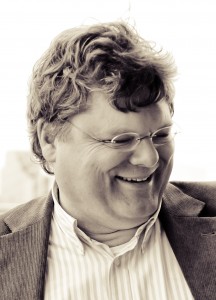
Jelle Jongsma photo Jelle Jongsma finished his race shortly before Christmas 2014.  It was my privilege to have known him and to have journeyed with him as a fellow pilgrim.  Below is an article I wrote for the Dutch Navigators about my memories of Jelle.

“In 2003 I began to travel to Western Europe and engage with some of the leaders of the various student ministries.  At the first event in Amsterdam I met a large Dutchman who introduced himself as Jelle Jongsma, the leader of the Dutch student ministry (NSV).  That began a journey together that has forever changed my life.

“My heart is flooded with many, many fond memories of our journey over these years.  It makes me smile just to remember Jelle’s boisterous laugh and overwhelming optimism.  Jelle was a contrast of seriousness regarding the advance of the gospel and the lightheartedness of daily life.  Jelle was a man who knew a big God and saw the world’s problems as very small by comparison.  His vision for the world and desire to be personally used by God were a constant theme in our times together.

“At a staff gathering at the Don Bosco retreat center we were discussing some of the problems facing a rapidly growing Dutch student work.  That morning we prayed over Ezekiel 36:37-38 asking that God would fill the Dutch universities and cities with ‘flocks’ of Dutch students and graduates who loved Him.  We prayed that they would carry this Navigator vision of laboring to Europe and the nations of the world.  While God was blessing the Dutch ministry, there was more…always more.  Jelle’s vision saw more opportunity for God to work everywhere he looked.  His faith and vision challenged me to trust God for more.

“I remember walking at Kinderdijyk with him praying for the Netherlands and the nations.  We visited his childhood home and I learned about his family heritage.  He invited me into his home and I watched him and Joke raise two beautiful young girls to become godly women.  We talked about everything from mission strategy to qualities of potential spouses for Myrthe and Susanne.  He and Joke made me feel a part of their lives and family.

“When Jelle and Bernard (Terlouw) visited us in Colorado, we laughed at the size of the large steak I cooked for them on our grill.  I remember laughing about me not liking Dutch krokets, my silliness at placing both peanut butter and jam on my sandwich, and him trying to teach me to enjoy red wine.  I’m so grateful for his patience and kindness when I called late at night asking him to please pick me up at the Den Hague train station, because once again I had gotten on the wrong train in Utrecht.  In many ways it seems that our roles reversed from me coaching him in ministry, to him teaching me about life and modeling Christlikeness.

“I would have liked to have had more time with Jelle, but I’m so grateful for what time we did have.  I’ll never be the same.  I will miss him and look forward to seeing him again when he greets me in heaven.  No doubt I’ll hear him before I see him, as his laugh will help me find him in the crowd.”

May we all have such friends in our journeys.

Post Navigation