Developing Kingdom Leaders – Tom Yeakley

Taking the Mystery out of Leadership

Archive for the category “#2 BE – Who a Leader Is”

A Sacrificial Life

Sacrifice means, “to give something up for the sake of something of higher value.” Sacrificial living is to give up our own lives for the purpose of following Christ. Jesus modeled the perfect sacrificial life by giving His very life for the sins of mankind. It is this type of lifestyle, one that chooses to live for others instead of self, that models real love for people (John 15:12-14).

Sacrificial living is a daily decision, not a one time event. Paul urges us to, “…. offer your bodies as living sacrifices, holy and pleasing to God–this is your spiritual act of worship (Romans 12:1).” We are to continually offer ourselves to God as living sacrifices as an act of worship to God for all He has done for us. He died for us! Living for Him is the least we can do!

Jesus reminds us that being His disciple means, “If anyone would come after me, he must deny himself and take up his cross daily and follow me” (Luke 9:23). To follow Christ means that we must first deny ourselves. That is, give up all rights to our own plans, desires, dreams, and hopes for our lives and let God determine our future. It is an abandonment of self into the loving hands of God. Secondly, we must take up our cross daily. To the first century audience, the picture of a person carrying a cross meant that they were condemned to death by the Roman government. They had no future–only death. Jesus uses this picture to illustrate that this death to self is to be daily, not just a one time decision. Each and every day we must choose to live for Christ and not self.

Sacrificial living goes against the wisdom of this world. The world says to seek self-gratification. “If it feels good do it!” The implication being, if it doesn’t feel good, then it should not be acted upon. To choose to deny self in order to gain the opportunity to serve God is something that will be hard for others to understand.

Are you living for self or dying to self?  It’s a daily, moment by moment choice and lifestyle.
The Amazing John Sung

John Sung was a young Chinese believer who was sent by his family to America to study chemistry. After obtaining his PhD from Ohio State he went on to seminary before returning to China. During his time in the U.S., God called John to a life of service for the Kingdom. On the ship home one evening, he took his diplomas and threw them into the Pacific Ocean, telling God he would follow Him wherever He led.

After arriving home, he told his family of his calling and decision to serve Christ rather than teach science. The family thought he had lost his mind and committed him a mental institution. During his 193 days in the asylum, Sung read the Bible through 40 times! Finally, the family had him released, and he became an itinerant evangelist traveling throughout China and many Asian countries. His fifteen-year ministry was characterized by unusual power and influence until his death at the age of 43.

Not all of those who seek God’s best will be asked to give up their careers in order to serve Christ full-time. Many will serve Him in God-honoring careers, being light and salt in the marketplace. But whatever their vocation, the pilgrims of this new generation of believers will often live lives that will be misunderstood by others.

Pilgrim values will be contrary to the values of this world. Life decisions based on eternal values will go against the tide of this world’s norms. Pilgrims will be thought of as foolish or at least not living up to their full potential. It will only be in the world to come that we will see completely who made the correct choices. “But wisdom is proved right by all her children” (Luke 7:35).

How’s your value system?  Is it based upon this world or the world to come?

Living with and Eternal Value System

What will it take to find a generation of God’s people who will live for the summit of God’s best? It will begin with individual believers who base their lives on eternal rather than temporal values. It will take believers who are so convinced about the reality of life in heaven that this world’s pleasures will not be able to grip their lives. It will begin with an eternal value system in the believer’s life.

Both the seen and unseen world have values. Individuals adopt these values and life’s choices are based upon them. This world places value on such things as youth and physical beauty, intelligence and education, the accumulation of money and physical goods, personal power and position, and self-gratification.

The world to come says that this world and its values will soon pass away. In the world to come we will all be given new bodies that don’t age or deteriorate (1 Cor. 15:35-58), we will know even as we are known (1 Cor. 13:9-12), there will be rewards for faithful service (1 Cor. 3:5-15), and we will reign with Christ forever (2 Tim. 2:12; Rev. 22:1-5).

Those believers with an eternal value system will have a pilgrim’s mentality. They will view this life as temporary, a brief interlude on the way to eternity forever with Jesus. They are only passing through this world on the way to a better life. The time given for this temporal life will be used for God’s glory, always with the eternal end in view. Decisions in this life will reflect the reality of the eternal life we await.

All these people were still living by faith when they died. They did not receive the things promised; they only saw them and welcomed them from a distance. And they admitted that they were aliens and strangers on earth. People who say such things show that they are looking for a country of their own. If they had been thinking of the country they had left, they would have had opportunity to return. Instead, they were longing for a better country–a heavenly one. Therefore God is not ashamed to be called their God, for he has prepared a city for them. (Hebrews 11:13-16)

Jesus reminds us that where our treasure is, there our heart will be (Matthew 6:21).  Where’s your treasure?  Where’s your heart?

The Leadership Wake

Henry Cloud has described what he calls the ‘leadership wake’ that all leaders leave behind them as they exercise their leadership. Just as a boat moving through the water leaves a wake (trace) behind it of two waves, so too leaders leave behind them the impact of their influence.

On one side of the leadership wake we have the ‘wave’ of mission or task. It is the reason we have a need for leaders – a mission or a task needs to be done. A leader is identified to help set a direction forward, align resources, cast vision, and manage the work of people in order to accomplish the mission.

A good leader when looking behind them at one side of their personal leadership wake would hope to see mission after mission, task after task, accomplished, completed, and finished for the glory of God. It is often the reputation of being a leader who gets things done that draws the attention of other leaders and encourages them to give you more responsibilities. The reward for good leadership is more responsibility!

But there is a second wave on the other side of the ‘leadership boat’ that is equally important for Kingdom leaders. That side of the wake is people. We want to see people thriving under our leadership influence, not surviving their time with us. Too often we see mission accomplished on one side and forget to look at the other side of the wake. Do we see people thriving or struggling? Are we creating a healthy and attractive environment where people are operating in their strengths and growing in their contributions?

The good Kingdom leader is looking at both sides of their personal leadership wake. They are taking note of whether the job given is accomplished and accomplished well. They are also noting whether people are thriving under their leadership. 360 reviews can be very revealing when direct reports are given opportunity to evaluate their leaders.

Much of Kingdom leadership is leading volunteers. And because this is mostly a volunteer army they have a vote on whether or not to serve under our leadership. Good leaders have volunteers who continue to ‘re up’ with them to serve again and again. Volunteers can ‘vote with their feet’ and leave if we are not leaving behind us a leadership wake that is healthy and attractive.

Have you looked behind you recently? Are you looking at both sides of the boat?

Leaders and Crisis

Life and leadership bring crisis moments whether we are expecting them or not. They just happen! This reality should prepare us to address them when they show up. But we are often taken by surprise when a crisis interrupts our plans. Crises are not something to be dreaded, but rather embraced.

The following are several thoughts on how to face up to your next leadership crisis:
1. Adjust your attitude! This current crisis is an opportunity for your personal growth as a leader as you address this latest ‘disaster.’ Rather than fearing this crisis, embrace it and look for the Lord to help you not only conquer the problem, but also turn this into a hidden blessing.

2. Move towards it now! It will not solve itself! If ignored, it will probably grow worse, bigger, more ominous, or ripple out to influence more people. Just as David ran towards Goliath (see 1 Sam. 17:48), move towards this threat and engage!

3. Do not delegate your problems to someone else on your team. Others can ‘smell’ that kind of lack of courage or unwillingness to deal with something that is messy.

4. While not delegating the crisis to another, loop in some others for help. You continue to run point on the crisis, but by bring in others for help they too will grow from the experience and their contributions will often help bring about a better solution than if you handled it all yourself.

5. Look for the best solution to the problem, not just the quickest or easiest. One practical discipline that I have tried to develop in this area of problem solving is to force myself to come up with several possible solutions, not just one. But doing this I am often pushing myself to think more deeply or broadly to different, more creative ways to solve the issue. The final action is often some combination of several possible solution scenarios.

6. Expect God to help you. He has promised to never leave you or forsake you (Mat. 28:20). Look to Him in the midst of seeking a way forward. The prayer of Jehoshaphat in 2 Chron. 20:12 is instructive, “Lord… we do not know what to do, but our eyes are on you.”

7. When the crisis abates, and it will, be sure to give thanks for deliverance from the current mess. An ungrateful spirit is disappointing to others serving with you and revealing about our hubris as if we were the ones who really solved the issue.
Crises come and crises go. Your either in the midst of one right now or one is coming soon. Get ready! One person’s crisis is another person’s ‘opportunity.’

Golden Apples

Hippomenes was a mythical, Greek young man who was in love with the beautiful Atalanta.  Atalanta, in addition to her striking beauty, was also a gifted runner, but she had a cruel, sadistic character.  Many young men became infatuated with her beauty and desired to marry her.  These men were challenged to a foot race with two conditions.  If the man won the race, he could marry Atalanta.  But if he lost, he would pay with his life.  Many a man tried and paid the ultimate price for his second place finish.

Hippomenes also became mesmerized by Atalanta’s beauty and challenged her to a race.  Shortly after the race began he lagging behind.  Reaching into his tunic, he withdrew a golden apple and threw it in front of the streaking Atalanta.  The flash of gold caught her eye and she stopped to pick up the golden fruit as Hippomenes raced by.  She soon recovered and again moved ahead of him.  Hippomenes pulled a second golden apple from his tunic and threw it in front of Atalanta who once again stopped to pick it up.  As Hippomenes passed the crouching Atalanta, she realized that the race was nearing the finish and she recovered soon enough to regain a comfortable lead with a short distance to go.

Hippomenes retrieved the last of his golden apples from his tunic and rolled it ahead of Atalanta as she approached the finish.  Atalanta was in a quandary; should she stop and pick up the apple or press for the finish line?  She reasoned that she certainly could do both, so she stopped to placed the golden fruit in her robe just a Hippomenes passed her and raced towards the finish.  She recovered, but now with such a short distance, she was not able to beat him.  Hippomenes had won!

This is not an illustration on how to find a life partner!  Rather, as you race through life, you will find the enemy of your soul rolling “golden apples” of opportunity, compromise and temptation in your path.  Are you stopping to admire these golden globes?  Have you picked them up and made them your own?

Developing a Leader’s Faith

DAVID – DEVELOPING AND EXERCISING FAITH
1 Samuel 17:1-50

Faith:  acting in accordance with what God has promised to do or in accordance with His character

Development of Faith

1 Samuel 17:36-37
Your servant has killed both the lion and the bear; this uncircumcised Philistine will be like one of them, because he has defied the armies of the living God. 37The LORD who delivered me from the paw of the lion and the paw of the bear will deliver me from the hand of this Philistine.”
Saul said to David, “Go, and the LORD be with you.”

Lesson:  Yesterday’s tests prepare us for today’s trials (cf. Jeremiah 12:5)

Exercising Faith

1 Samuel 17:38-40
Then Saul dressed David in his own tunic. He put a coat of armor on him and a bronze helmet on his head. 39 David fastened on his sword over the tunic and tried walking around, because he was not used to them.  “I cannot go in these,” he said to Saul, “because I am not used to them.” So he took them off. 40 Then he took his staff in his hand, chose five smooth stones from the stream, put them in the pouch of his shepherd’s bag and, with his sling in his hand, approached the Philistine.

Lesson:  God has provided all we need to accomplish His work through us (cf. Zechariah 4:6)

1 Samuel 17:45-47
David said to the Philistine, “You come against me with sword and spear and javelin, but I come against you in the name of the LORD Almighty, the God of the armies of Israel, whom you have defied….47 All those gathered here will know that it is not by sword or spear that the LORD saves; for the battle is the LORD’S, and he will give all of you into our hands.”

Lesson:  It is God, not our faith, resources, or abilities, who brings success to our efforts  (cf. Luke 17:5-6; 2 Corinthians 1:8-9)

As Kingdom leaders we are reliant upon unseen resources that we tap into by faith.  This is a learned habit developed over a lifetime.  Where’s your confidence resting?  Is it in what is seen and known or are you trusting the unseen Lord to lead, guide, and resource you?

Leading from a Focused Life

Dr. RJ (Bobby) Clinton in his masterful work titled, “Strategic Concepts that Clarify a Focused Life,” states the following principles that have proven to be a guiding light for me over the years.

For Ezra had prepared his heart to seek the law of the Lord, and to
do it, and to teach in Israel statues and judgments.       Ezra 7:10

“Clearly some Bible characters led focused lives.  There was purpose in what they did. Disciplined minds followed through on decisions that continually led to that purpose.  What can we learn about lives that are extremely focused?  Do they just happen?

“Leaders, must make decisions about life and ministry which flow from their understanding of who God has made them to be and for what God is shaping them.  These decisions will lead them to effective purposeful lives, which in retrospect will be seen to have been focused lives.  But it is not a self-seeking individualistic choice of life, but a seeking of what a SOVEREIGN GOD is doing—His purposes.  All of the focused life thinking must be done in light of a strong understanding of the Sovereignty of God.

“What is a focused life?  A focused life is:

• a life dedicated to exclusively carrying out God’s effective purposes through it,
• by identifying the focal issues, that is, the life purpose, effective methodology, major role, or ultimate contribution which allows
• an increasing prioritization of life’s activities around the focal issues, and
• results in a satisfying life of being and doing.

Dedicated usually indicates that there was some sort of second decision beyond just being a Christian.  That decision places all that the leader is or has at God’s disposal to be used by and for God.  From that moment on, the leader is on a pilgrimage to discover God’s special purposes, that is, a personal destiny with God.

Life purpose, effective methodology, major role, or ultimate contribution are called the focal issues.  That is, they are the major ways that God will reveal that for which we are designed.  In a nutshell, life purpose is the driving force behind what we do.  Major role is the occupational position from which we accomplish that life purpose.  Effective methodologies are means that are effective for us to deliver our ministry that flows from that life purpose.  And ultimate contributions are the lasting results of that ministry

“It is the discovery of these focal issues, that is, their movement from implicit to explicit, which provides the possibility of prioritization or in other words, proactive decision-making. The earlier we can discover these issues, the earlier we can proactively act upon them. The leader then makes strategic decisions, which take into account the discoveries. In short, they manifest aspects of a focused life.

“Note the final bold-faced words in the focused life definition, a satisfying life of being and doing.  Leaders who discover life purpose and any other focal issue, which synergizes with it, will see things happen in their lives.  They will become people of character.  They will accomplish.  When all is said and done and life is drawing to a close, they can look back and say, “Folks, you are looking at a fulfilled person.  I am happy with the end product of God’s shaping—who I am, what I have become.  I am happy at what God has done through me—what I have done.  Life was worth living.  It has been a fulfilling pilgrimage.  Praise God!” “

How’s your focus?

Success – A Leader’s Greatest Challenge

In 2 Samuel 8 we read about David and how he handled his success as a leader.  The following are several observations and principles that we can take away and apply to our own leadership should we experience success.

In vs 1-5 we see the listing of David’s initiatives against the Philistines, Moabites, and Arameans.  The results are summarized in verse 6 – The Lord gave David victory wherever he went.  David experienced great success in his military campaigns against the surrounding enemies of Israel.  In fact, he had success in everything that he attempted.

The resulting success of his campaigns led to David becoming wealthy.  Remember that this son of Jesse came from a family that raised sheep for a living.  This new-found wealth came quickly and could have turned the heart of a lesser man.  But we see David’s response in vs 11 – King David dedicated these articles to the Lord, as he had done with the silver and gold from all the nations he had subdued… 

His successful military campaigns and growing wealth led to the seemingly inevitable conclusion as to how he was viewed by others.  In vs 13 we read – And David became famous…  Personal fame for the successful leader is a challenge that many leaders face, just as David had to deal with.

In vs 15 we see how David led after experiencing successful leadership efforts, growing personal wealth, and increased personal fame – David reigned over all Israel, doing what was just and right for all his people.  This is one of the reasons why David is a hero of mine.  He seemed to be able to handle success well.

Now immediately we are thinking of his low points in his adultery with Bathsheba or his counting of the army – yes, those were huge mistakes with huge consequences for his life and leadership.  And yet, through it all, he recovered and did not let those personal failings derail him.  He confessed his sin, humbled himself before God and men, and continued to lead.  All failures need not be fatal!

David was real – he had great strengths, also some glaring weaknesses.  Yet through it all he “did what was just and right for all his people.”  How are you handling your success?  Are you stewarding well God’s resources that have come your way due to this success?  What goes on in your heart when people point out your successes or publicly praise you?

In Memory of Jelle

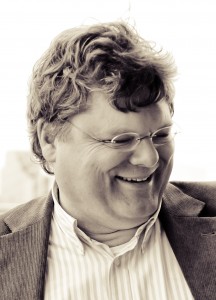
Jelle Jongsma photo Jelle Jongsma finished his race shortly before Christmas 2014.  It was my privilege to have known him and to have journeyed with him as a fellow pilgrim.  Below is an article I wrote for the Dutch Navigators about my memories of Jelle.

“In 2003 I began to travel to Western Europe and engage with some of the leaders of the various student ministries.  At the first event in Amsterdam I met a large Dutchman who introduced himself as Jelle Jongsma, the leader of the Dutch student ministry (NSV).  That began a journey together that has forever changed my life.

“My heart is flooded with many, many fond memories of our journey over these years.  It makes me smile just to remember Jelle’s boisterous laugh and overwhelming optimism.  Jelle was a contrast of seriousness regarding the advance of the gospel and the lightheartedness of daily life.  Jelle was a man who knew a big God and saw the world’s problems as very small by comparison.  His vision for the world and desire to be personally used by God were a constant theme in our times together.

“At a staff gathering at the Don Bosco retreat center we were discussing some of the problems facing a rapidly growing Dutch student work.  That morning we prayed over Ezekiel 36:37-38 asking that God would fill the Dutch universities and cities with ‘flocks’ of Dutch students and graduates who loved Him.  We prayed that they would carry this Navigator vision of laboring to Europe and the nations of the world.  While God was blessing the Dutch ministry, there was more…always more.  Jelle’s vision saw more opportunity for God to work everywhere he looked.  His faith and vision challenged me to trust God for more.

“I remember walking at Kinderdijyk with him praying for the Netherlands and the nations.  We visited his childhood home and I learned about his family heritage.  He invited me into his home and I watched him and Joke raise two beautiful young girls to become godly women.  We talked about everything from mission strategy to qualities of potential spouses for Myrthe and Susanne.  He and Joke made me feel a part of their lives and family.

“When Jelle and Bernard (Terlouw) visited us in Colorado, we laughed at the size of the large steak I cooked for them on our grill.  I remember laughing about me not liking Dutch krokets, my silliness at placing both peanut butter and jam on my sandwich, and him trying to teach me to enjoy red wine.  I’m so grateful for his patience and kindness when I called late at night asking him to please pick me up at the Den Hague train station, because once again I had gotten on the wrong train in Utrecht.  In many ways it seems that our roles reversed from me coaching him in ministry, to him teaching me about life and modeling Christlikeness.

“I would have liked to have had more time with Jelle, but I’m so grateful for what time we did have.  I’ll never be the same.  I will miss him and look forward to seeing him again when he greets me in heaven.  No doubt I’ll hear him before I see him, as his laugh will help me find him in the crowd.”

May we all have such friends in our journeys.

Post Navigation